
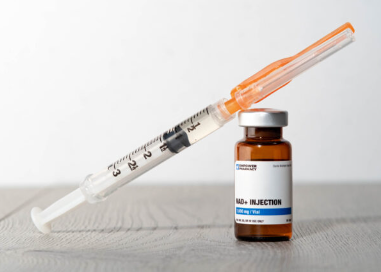
Subcutaneous NAD+ is a fantastic product to offer in your practice. I personally love it as do my patients!
Diving into Subcutaneous NAD+: A Quick Overview
Subcutaneous NAD+ supplementation involves delivering NAD+ directly into the SubQ tissue. This approach allows for the slow release of NAD+ into the bloodstream, promoting sustained benefits over time.
The Science Behind Subcutaneous NAD+ Supplementation
Subcutaneous administration of NAD+ offers several potential benefits:
-Steady Release: Unlike oral supplements that need to withstand the digestive process, SubQ NAD+ provides a controlled and sustained release of the coenzyme into the bloodstream.
-Avoiding Digestive Breakdown: NAD+ supplements taken orally might encounter degradation in the digestive tract. Subcutaneous delivery bypasses this concern, ensuring a higher percentage of the supplement reaches systemic circulation intact.
-Less Frequent Administration: SubQ NAD+ might require less frequent dosing compared to oral supplementation, offering convenience and potentially improving patient compliance.
Potential Clinical Benefits of Subcutaneous NAD+ Supplementation
Energy Enhancement: NAD+ is integral to cellular energy production. SubQ supplementation may help patients experience improved energy levels and vitality.
Cellular Repair Support: NAD+ supports DNA repair mechanisms, aiding in maintaining cellular health. SubQ delivery could provide a more consistent supply of NAD+ for enhanced repair processes.
Metabolic Regulation: NAD+ is involved in various metabolic pathways. Subcutaneous delivery might offer a more direct and effective way to regulate metabolic processes.
Dosing of Subcutaneous NAD+ Supplementation
The dosing is relatively simple. I start most patients on 100 mg twice weekly, and a typical vial will last about 10 weeks. Patients feel the effects within an hour usually. As always, use your best clinical judgment and ensure you understand new treatments before administering them!

31 Responses
Do you give this in office or send it home with patients?
Both
Aren’t the vials only good for 28 days, not 10 weeks
28 days from first puncture per USP guidelines. I have had dozens of pharmacists tell me it is overkill. I personally use vials on myself for 2-3 months without issue. Practice sterile technique and it isn’t a problem.
For IV infusions where we push NAD+ after the infusion, can it be given SQ instead to save time?!
Absolutely. I don’t give NAD IV anymore because it is too much of a pain.
Does the site of subq create bruising and pain?
What’s the research behind IM vs subq?
I haven’t seen bruising and I am not aware of any studies comparing either one.
How would you monitor the effects? You said you start at 100ng. Do you ever increase it?
Really nothing to monitor for with low doses like this
What do you charge for the injection?
$250 for the vial
Is SubQ appropriate for Glutathione as well? Thank you!
No, IM
Glutathione is best IM correct?
Yes
Where can we get this medicine?
Most compounding pharmacies have it
What is the max dose and in what time frame?
200mg twice a week is the most I would give
Do you typically recommend they inject in the mornings?
Yes!
How long do you give the patient NAD+ 100mg SQ twice a week?
How long do you give Glutathione IM 200mg twice a week?
You can do both practically indefinitely.
Do you have any research articles on subcutaneous NAD+ benefits?
No, it is just as effective as IM though…
Is it better to start with a loading dose of NAD IV and then do subcutaneous injections or there isn’t a need? If I’m charging $400 for 250mg NAD IV(2 hour infusion) in Chicago, what is a resonable charge for 100mg subcutaneous?
Nah, you can just do subQ from the start.
Is there a negative to dosing 50mg, 4times per week if a patient can’t tolerate the 100mg dose?
I wouldn’t see an issue with that
Are there any contraindications? I’m finding conflicting information about cancer patients. Who can’t take it? Does it interfere with medications?