
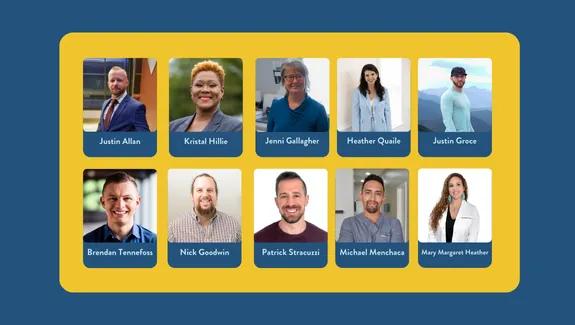
The Elite Nurse Practitioner invites all NPs to join us at the Riverwalk Marriott in San Antonio on October 25-27 for our second annual live event. Get valuable business and clinical insights from an eclectic group of experts, network with fellow nurse practitioner entrepreneurs, and meet our founder, Justin Allan! Here, we chat with our speakers about their niche concentrations and gather unique perspectives on holistic approaches to healthcare.
Registration is open now! Secure your spot here.
Learn how to overcome adversity as a nurse practitioner entrepreneur with Kristal Hillie, MSN, APRN, FNP-C, on Friday, October 25th at 1:20 PM.
How can medical providers build resilience throughout their education and professional journey?
Medical professionals can build resilience by establishing a network of empathetic colleagues who are a safe place to share positivity and negativity. Having a support network is crucial, because it validates your experiences and helps gain perspectives from those in other professions, locations, and cultures. Attending professional conferences such as the Elite Nurse Practitioner live event is a great way to renew long-lasting relationships and establish new professional relationships.
What is the importance of serving marginalized populations as a medical provider?
It is important to consider marginalized populations as they are most impacted by multi-dimensional and multi-generational disparities. Such disparities erode the trust within
communities and are usually a result of failures that leave access, affordability, and culturally- informed care lacking or completely absent. Serving marginalized populations helps me to acknowledge, challenge, and disrupt systems that afford comfortability to the privileged, including myself. It’s important to fight for equality for all, across all systems, and to know that we are indeed all the same but with different struggles.
Jenni Gallagher, APRN, touts the benefits of low dose naltrexone and a functional approach to nonalcoholic fatty liver disease (NAFLD) treatment on Saturday, October 26th at 9 AM.
How can functional medicine principles be used to manage diseases that are resistant to typical treatment methods?
More functional considerations in our treatment management provides for effective symptom improvement and often disease reversal, since we are addressing the cellular level of the body. The cell is the major component of health, anatomy, and physiology; supporting cellular function and energy production allows for the human body to remarkably heal itself in most instances. In my practice, we often see many chronic diseases completely or nearly resolve. Patients report feeling like “I got my life back” and can enjoy life and family activities again.
Why is it important to take a holistic approach to medicine?
A more holistic approach to healthcare provides patients with a completely different kind of care–making them partners in their treatment plans and encouraging them to take control of their own health destiny, improving overall health, reducing symptoms, and often reversing chronic diseases, including PCOS, type 2 diabetes, hypertension, various types of arthritis/MSK complications, and more.
Get expert advice on the comprehensive treatment of perimenopausal patients with Dr. Heather Quaile, DNP, WHNP-BC, AFN-C, CSC, IF, FAANP on Saturday, October 26th at 10:05 AM.
What is the number one thing providers can do to support reproductive wellness in their patients?
I use a biopsychocial approach in my practice—creating treatment protocols informed by the interconnectedness of the mind, spirit, heart, and body when it comes to sexuality. When treating the full spectrum of reproductive and sexual health conditions, it’s important to consider the ways our environment, physical wellness, and mental health play a role in disease presentation.
How should reproductive healthcare strategies evolve over time as a patient moves into menopause?
Providers should aim to manage and treat acute conditions and stabilize the patient. In my practice, we simultaneously teach behavior modification and education to help with sexual concerns. Lastly, we work with the area’s best healthcare providers when other areas of biopsychosocial response need extra assistance. Lifestyle changes, hormones, age, and chronic health concerns should always be considered as you support patients through each stage of life.
The psychiatric implications of testosterone therapy, decoded. Catch this illuminating talk with Justin Groce, MSN, NP-C, CSCS on Saturday, October 26th at 11:30 AM.
How can men’s health providers adequately address patient mental health in their practice?
All providers should consider screening any man who presents to the clinic with depressive symptoms for possible hypogonadism. This is because hypogonadism can cause depression and/or anxiety. This is important to rule out because many psych meds can lower testosterone, which can be detrimental to patients with pre-existing testosterone deficiency.
What would you say to patients who are hesitant to undergo hormone therapy because of potential negative mental health effects?
Testosterone replacement has historically gotten a bad rap. People tend to think that getting on testosterone will make men angry, aggressive, or violent. That couldn’t be farther from the truth. In fact, most men who get on testosterone replacement report improved mood, better focus, less anxiety, and an overall better sense of well-being. That’s because testosterone can modulate neurotransmitters that are necessary for improved mental well-being.
Brendan Tennefoss, DNP, AGPCNP-BC, ACHPN, AFMC, will speak on gut and intestinal health through a functional medicine lens on Saturday, October 26th at 1:30 PM.
What is the most important information NPs of all disciplines should know about gastrointestinal health?
The gut plays a central role in overall health, influencing not only digestion but also the immune system, mental health, and chronic disease development. It is why practitioners often cite Hippocrates’ adage, “all diseases begin in the gut”. Understanding and addressing intestinal permeability can be crucial in managing a wide range of conditions, including autoimmune disorders, metabolic syndrome, and mental health issues. Study of the microbiome is evolving, which is fascinating to me. I’m constantly learning about the role of individual bacteria in the gut, as well as the interactions of multiple bacteria, viruses and parasite strains in the intestines.
Which labs do you utilize most often in your practice?
In my practice, I utilize labs that assess markers of inflammation, immune response, and gut barrier integrity, such as zonulin, lipopolysaccharides (LPS), and stool tests that evaluate microbiome diversity and intestinal inflammation. These labs help in diagnosing and managing conditions related to intestinal permeability and overall gut health.
Nicholas Goodwin, DNP, PMHNP-BC, ARNP, gives the latest updates on the functional medicine space, including the use of lithium, thyroid medications and MDMA in clinical settings on Saturday, October 26th at 4 PM.
Why should providers consider utilizing alternative methods in their practice to address treatment-resistant conditions?
Pursuing and receiving treatment for mental illness can be nerve-wracking. Many people are in treatment for years or even decades before they find relief. Often medications have significant side effects like decreased sex drive, weight gain, or even considerable negative cognitive effects. As practitioners, we weigh the risks/benefits with clients but knowing and having interventions that are effective but can have significantly lower risk is essential for any provider, not just functional providers. It is important to be well-versed in all available treatments.
How can the medical field move past stigma around unconventional mental health therapies, including ketamine, MDMA, etc.?
Knowledge is the most important thing. The more providers can know about the options of these treatments–or the potential options–the more likely these treatments will start seeing the light of day. This includes being well-versed in the criticism as well as the limitations of psychedelic treatment.
Patrick Stracuzzi, FNP, will teach conference attendees best practices for operating a telemedicine clinic on Sunday, October 27th at 9 AM.
How can technology be used to strengthen the quality of care that an NP delivers?
Technology is an essential tool to help create effective patient care. There are many programs that help provide significant improvements to patient care at an individual level as well as at a macro scale. Programs such as ChatGPT. VisualAI, ChatAI, and other AI programs can be used to help with our patient education. Many of these programs can be incorporated into our practice for more efficient communication with patients.
What is your prediction for the future of digital healthcare?
I don’t think that digital healthcare is going anywhere. For both niche businesses like the Elite Nurse Practitioner or even insurance-based medicine, I think telemedicine is here to stay. My prediction is we will have telemedicine clinics and even more hybrid models continuing to grow and change the landscape of medicine. This can only benefit all clinics as well as access to care for patients.
Get valuable information on scaling a direct primary care (DPC) practice from Michael Menchaca, MS, FNP-C on Sunday, October 27th at 10:05 AM.
How does a direct primary care model strengthen the relationship between patient and provider?
Imagine this: you’re at your favorite coffee shop, chatting with your provider. No rushing, no ten-minute time crunch, just relaxed conversation where you feel heard and understood. That’s the essence of direct primary care. In a nutshell, the direct care model turns your provider into your health partner, making healthcare feel personal, accessible, and truly centered around you. It’s like having a provider who is as invested in your health as you are. That’s a relationship built to last.
What benefits does a DCP offer vs. a traditional medical business model?
DPC is a healthcare experience where you are the priority. No long waits, no surprise bills, no unanswered calls, and direct access to your provider whenever you need it. You literally have their number saved in your phone to text and call when things go wrong. That’s what the DPC model offers. It’s healthcare that’s personal, transparent, and truly centered around you. With DPC, you get more time with your provider, a focus on prevention, and a relationship that’s built to keep you at your healthiest. You’re essentially ditching the hassles of traditional healthcare and stepping into a system designed to put your health first, every time.
Mary Margaret Hether, DNP, NP-C will host a session on how to establish a comprehensive wellness clinic on Sunday, October 27th at 11:30 AM.
What is the connection between aesthetics and internal health?
Our mind, body, and spirit are connected to our inner and outer beauty and health. Confidence is beautiful and aesthetic treatments can boost one’s self-esteem, reduce anxiety, and improve overall mental health.
How are beauty and wellness intertwined?
You can’t have one without the other. In my practice, this is shown over and over in my weight loss and aesthetics clients. It’s a beautiful thing to be a part of someone’s self-improvement journey.
A special invitation from Elite Nurse Practitioner founder, Justin Allan:
Compassion. Perseverance. Courage. Innovation. These qualities run deep within the Elite NP community, and are the guiding principles that help us learn and grow as a team. Our tight knit group of nurse practitioner entrepreneurs have built meaningful connections online, and we are thrilled to offer the opportunity to enrich these relationships in person. Elite NP’s second annual conference in San Antonio, TX on October 25-27, 2024 will be jam-packed with expert talks and networking sessions. This dynamic lineup of events is designed to send our attendees home with the knowledge and inspiration needed to build successful careers and achieve financial prosperity. We hope to see you in Texas soon!
Justin will open the weekend with an empowering talk on investment portfolio building and business sales on Friday, October 25 at 12 PM.

4 Responses
Will you have a virtual option for the conference ? or option to.pick a day that you find the topics best suits you.
Yes, there will be a virtual option announced soon. Its a one price sort of thing, so you won’t be able to just pay for certain lectures
Hi Justin!
Would you recommend the conference for nurse practitioners who are just thinking to start own practice? Or it is more for NPs who already own and looking for growth and improvement? Would it be better to start with courses/membership or do you recommend starting with the conference?
Also, are you planning a spring conference and at what location if known? October/Texas might not work for me so trying to plan for future.
Thank you so much!
This isn’t going to be a practice startup conference, but it would help those in the startup phase. I would recommend taking a course first though as we arent going to discuss the basics of starting a practice. And we don’t have anything planned for the spring yet.